Ballroom Juvenile Sauropod Tracks 2023
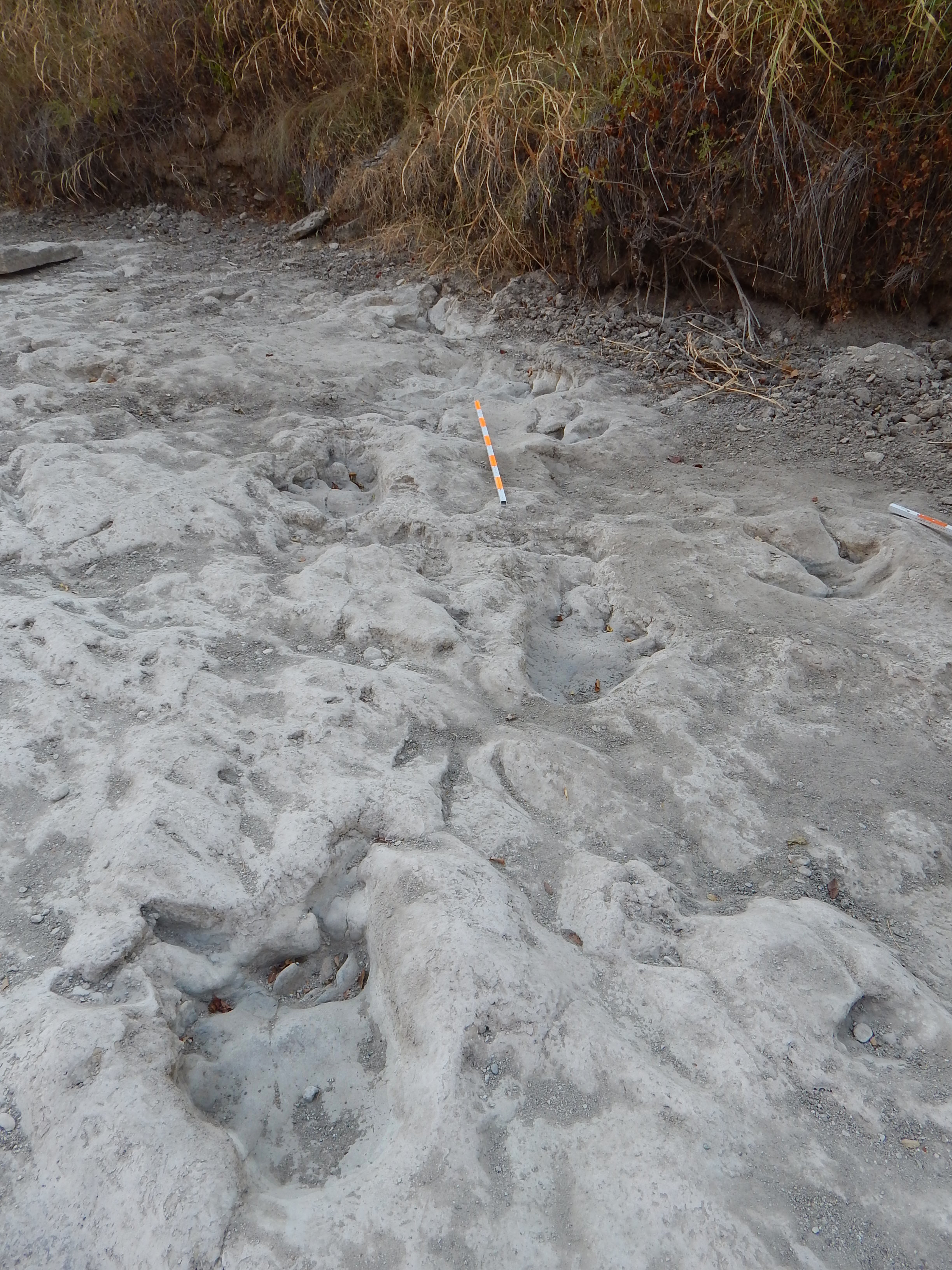
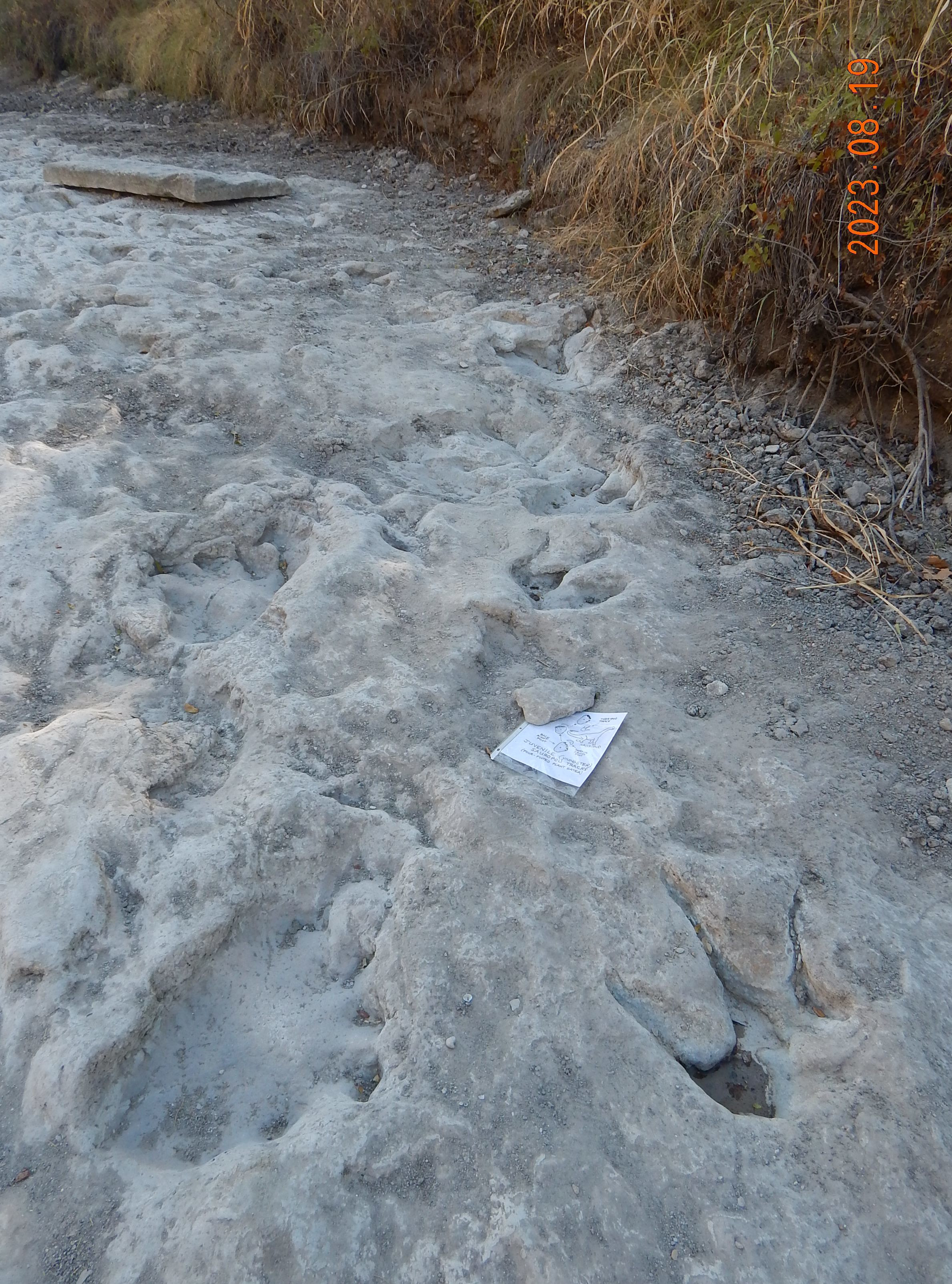
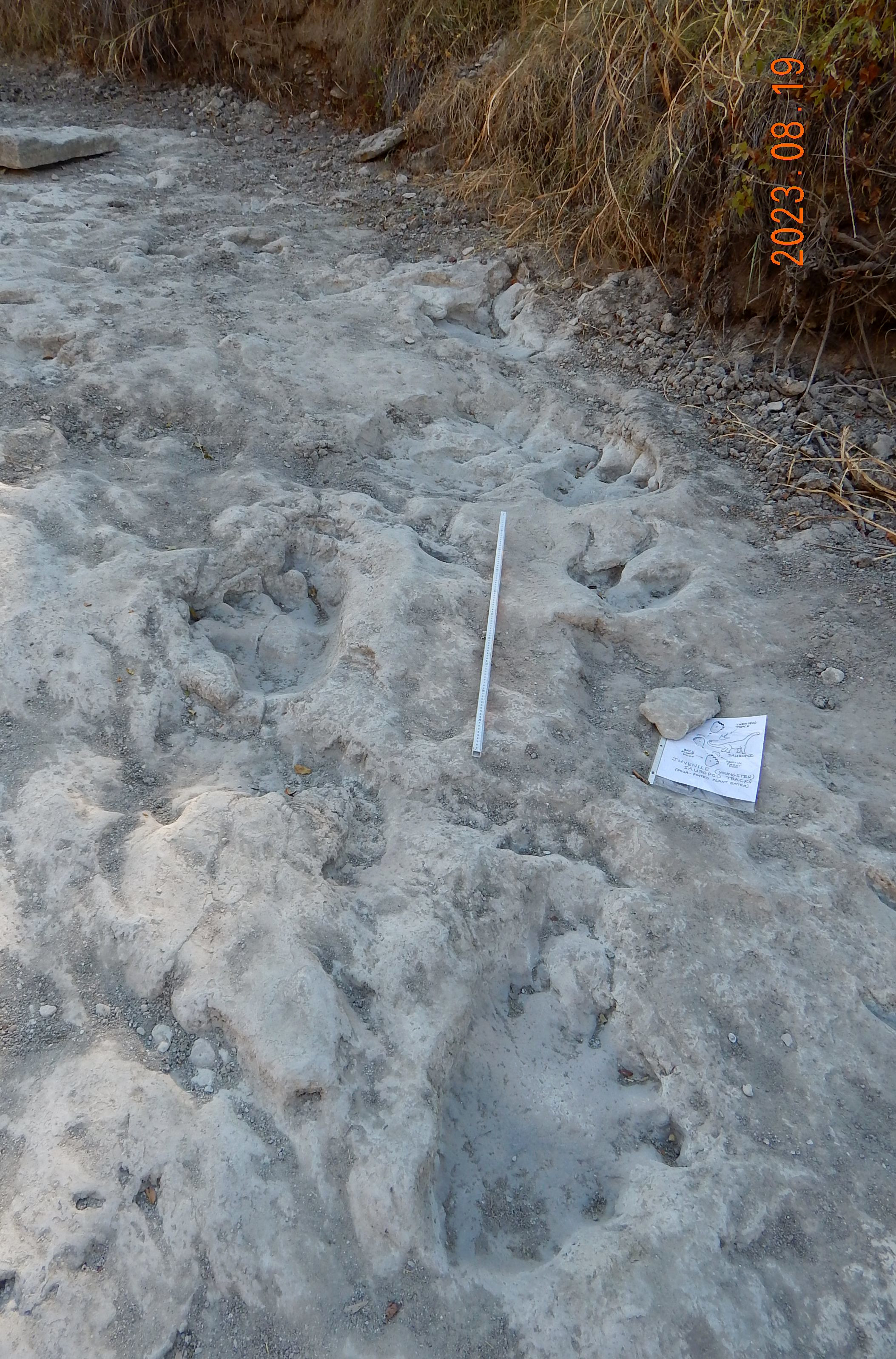
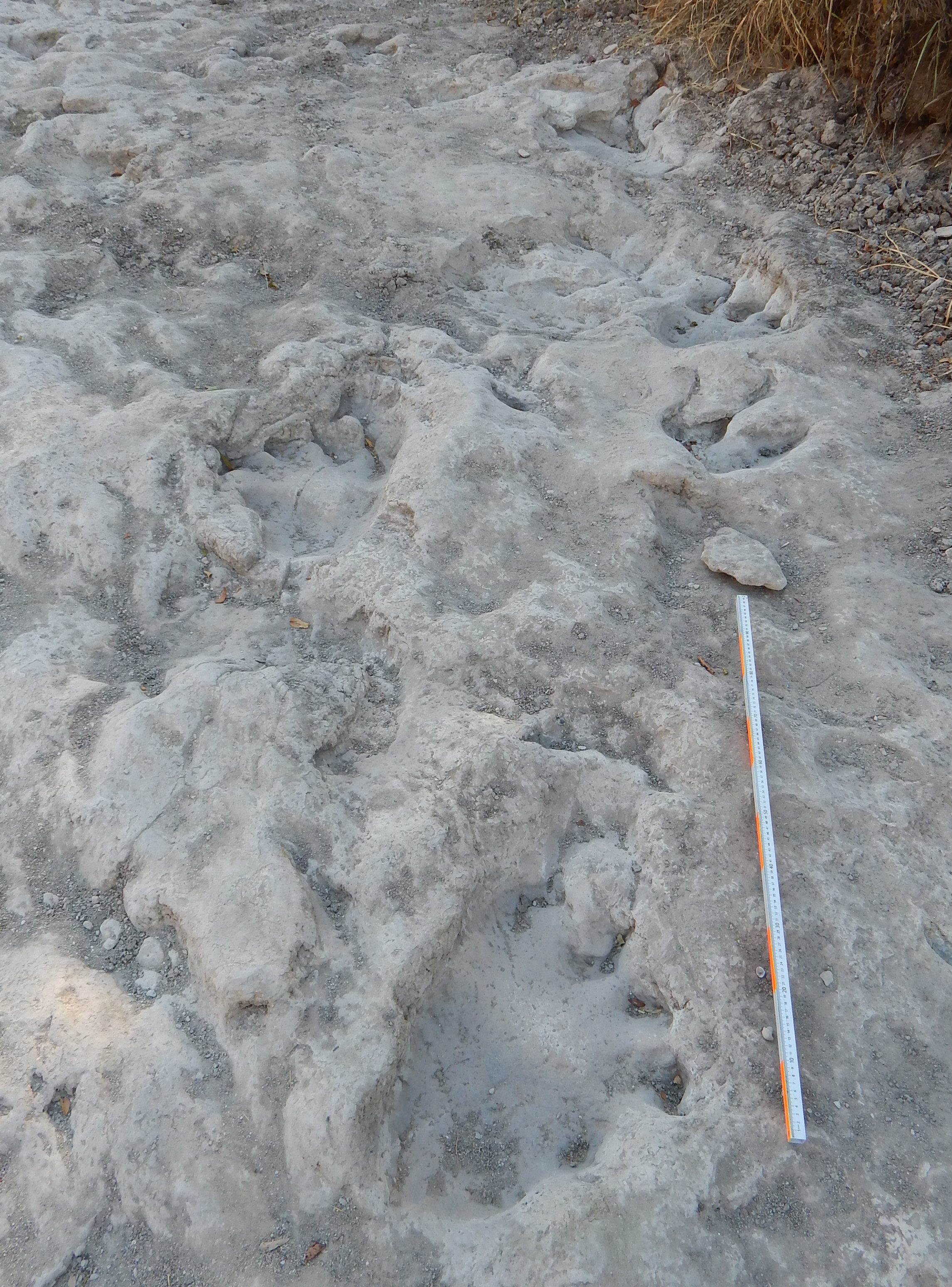
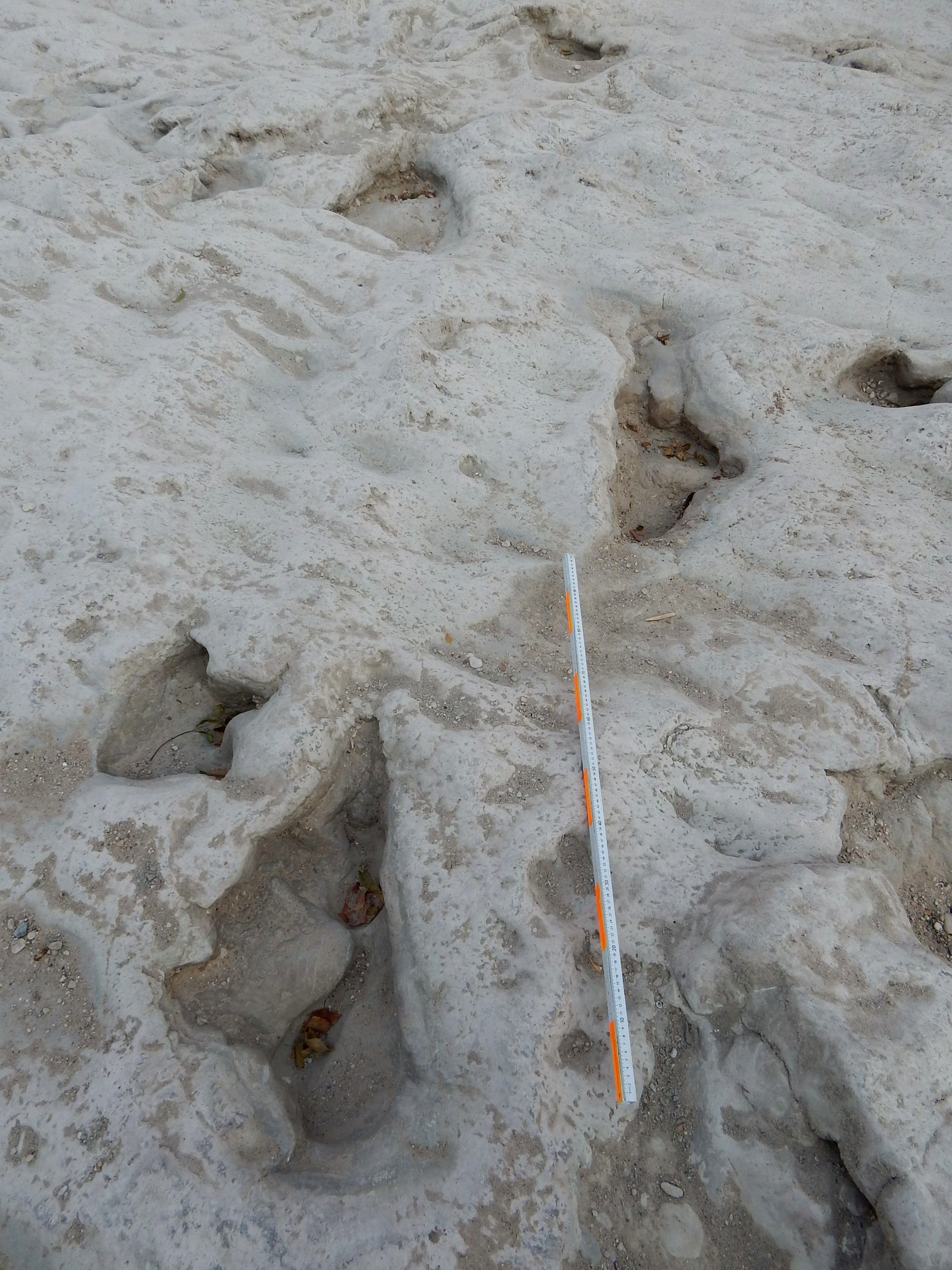
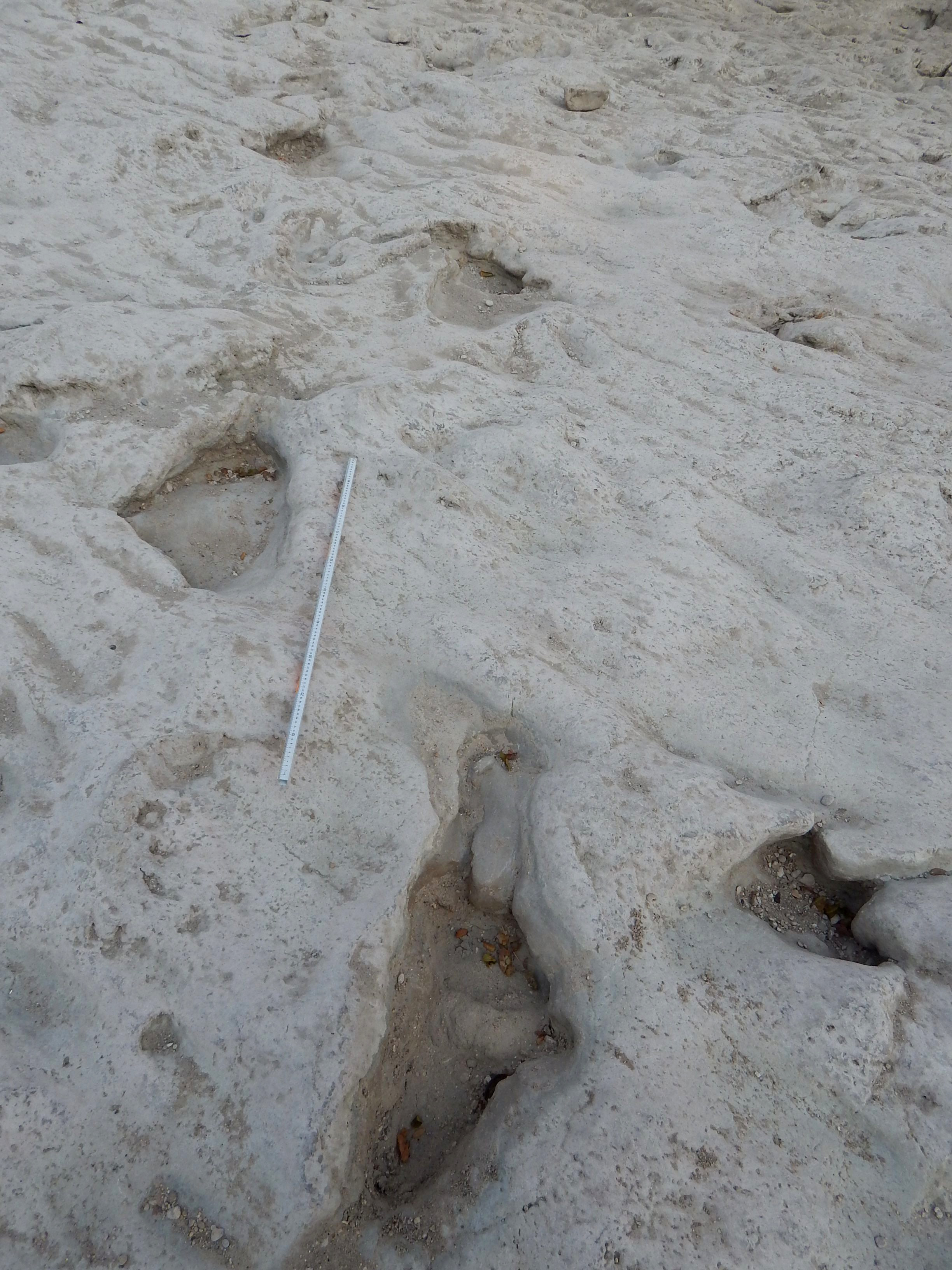
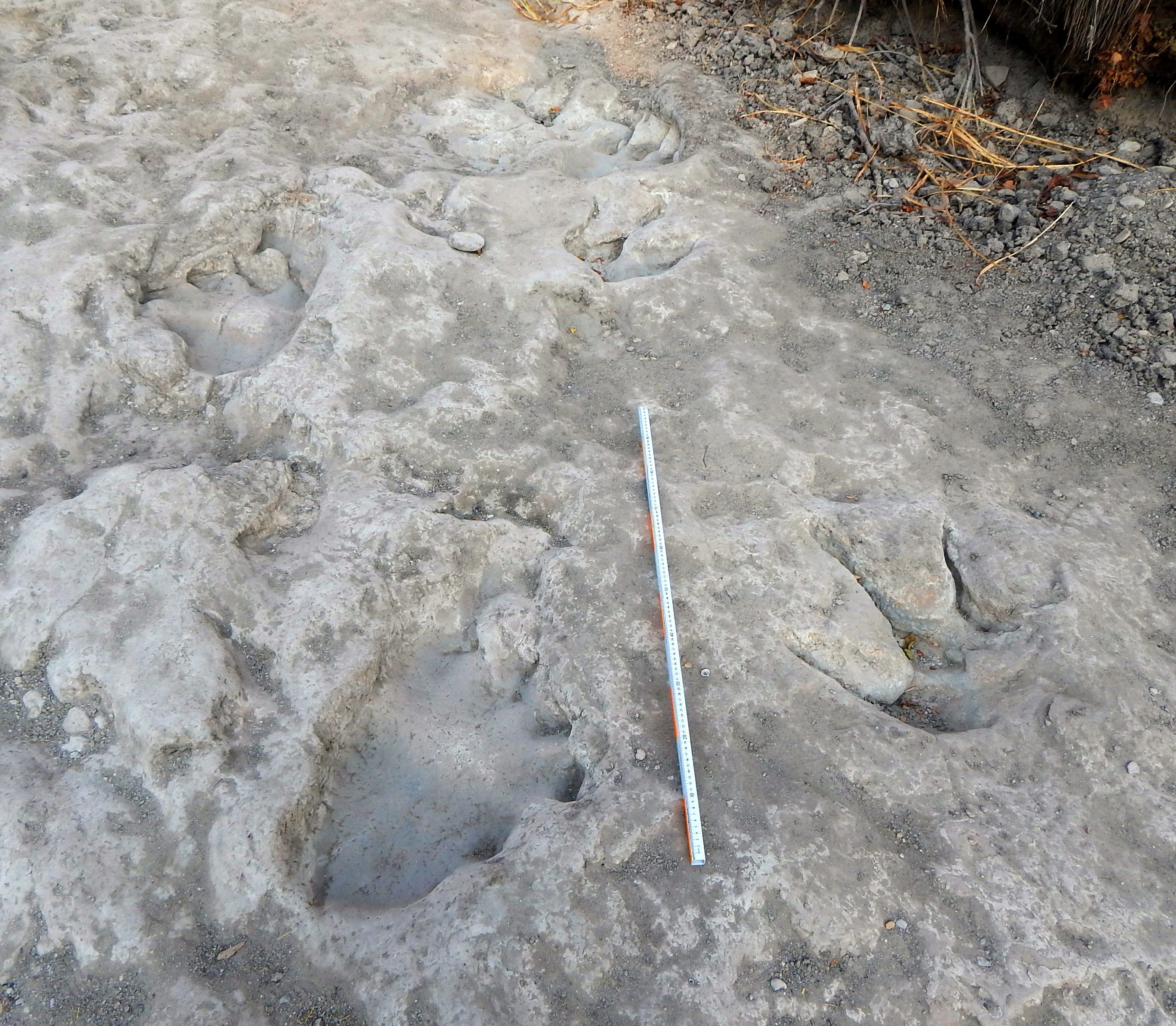
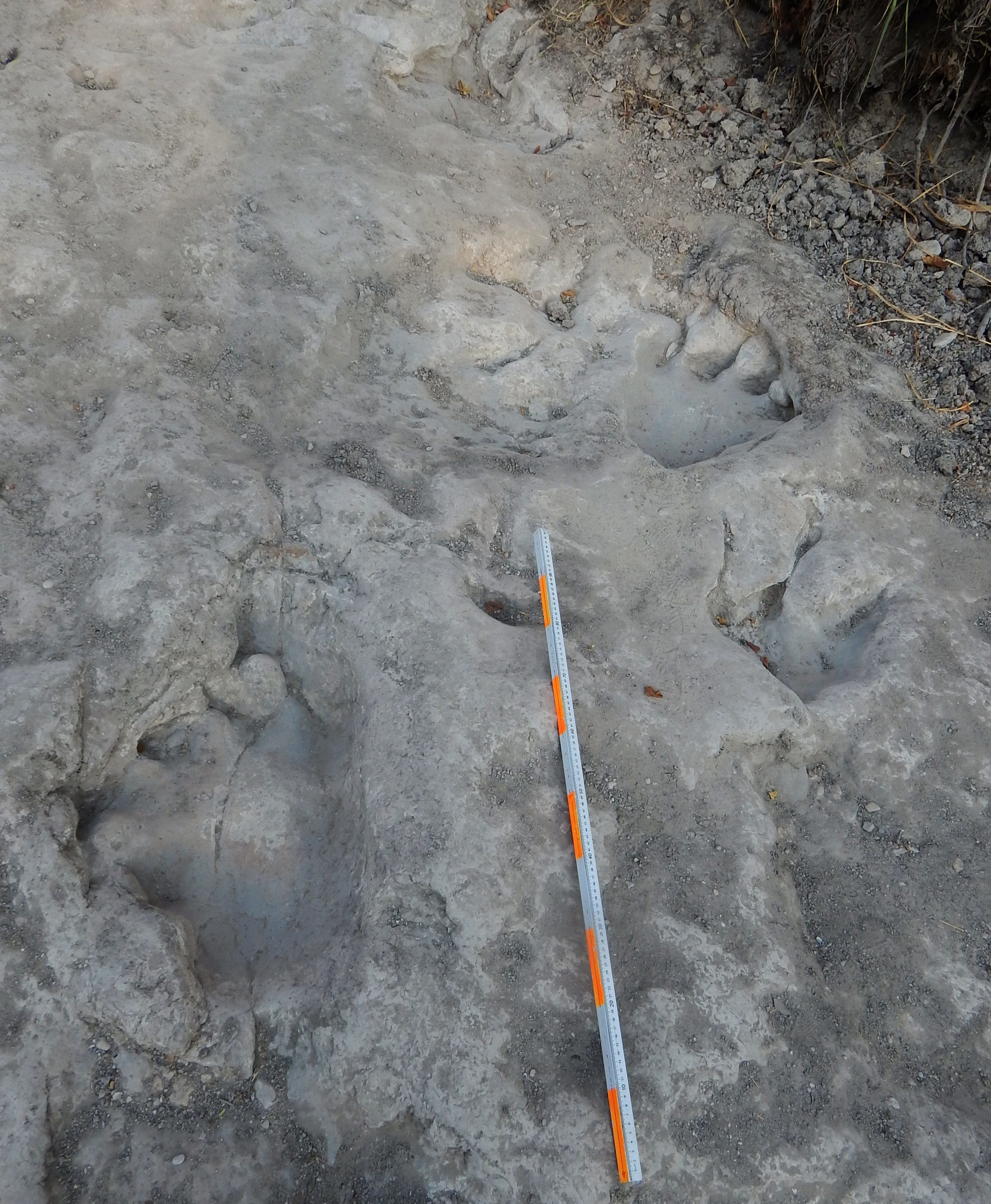
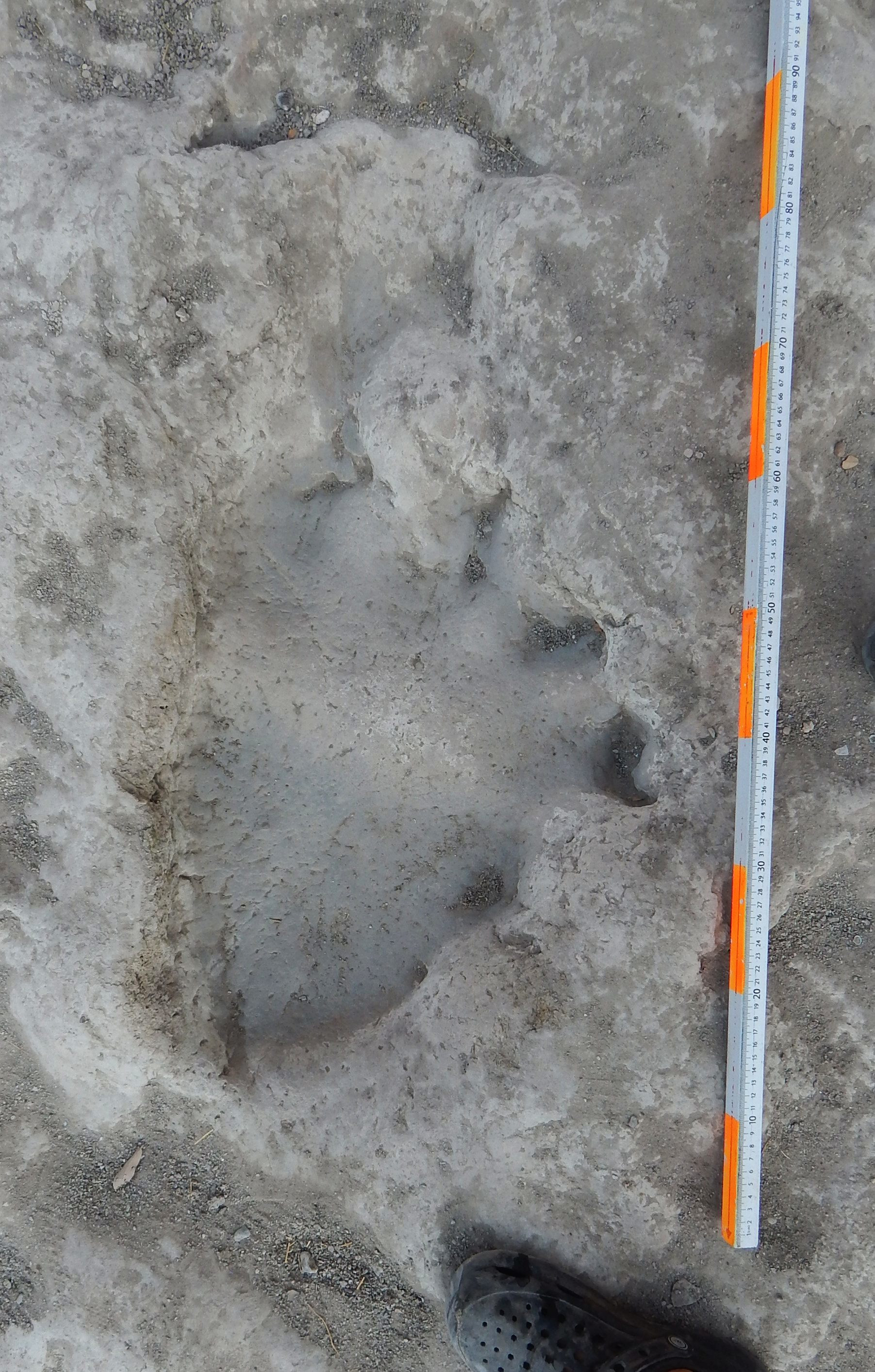
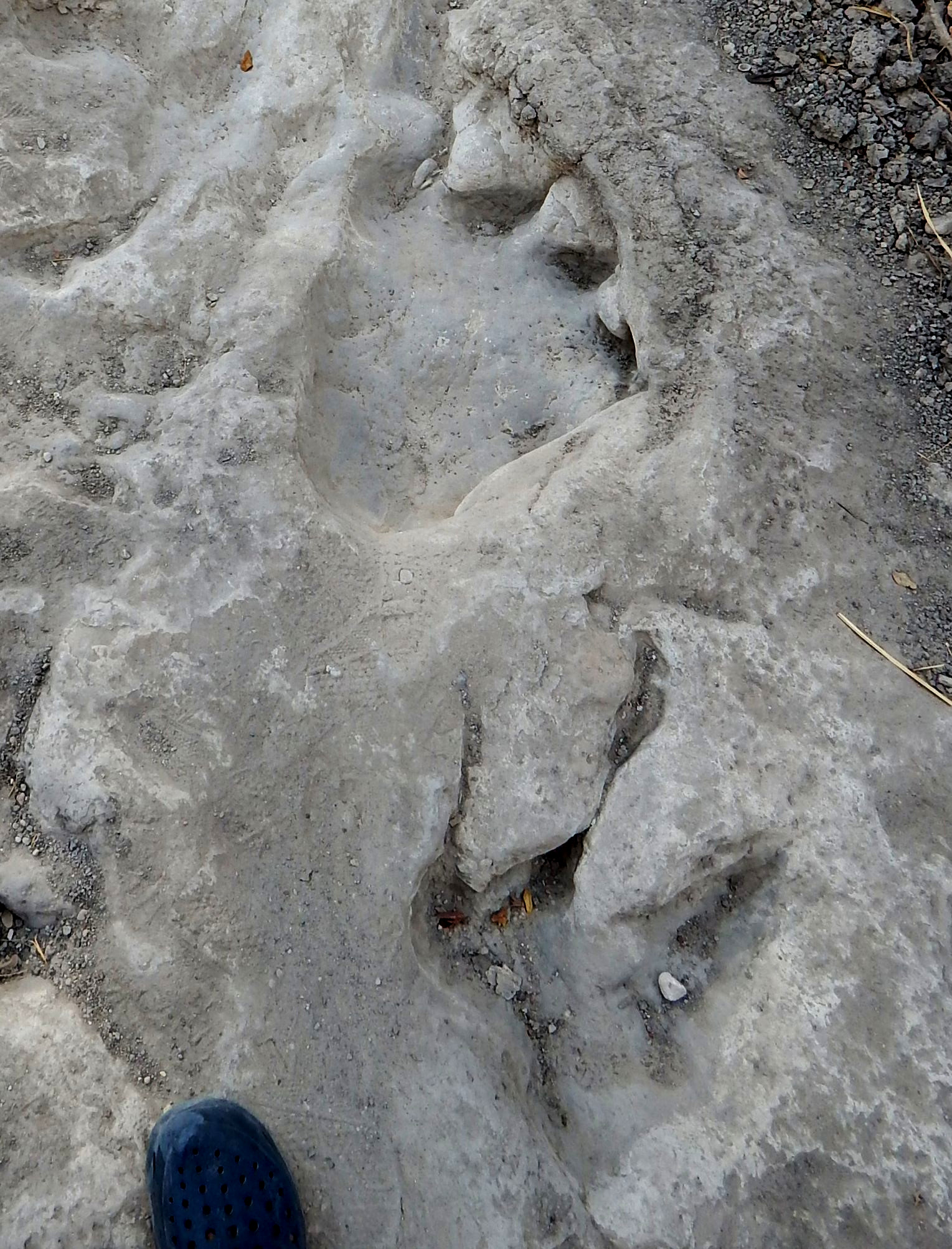
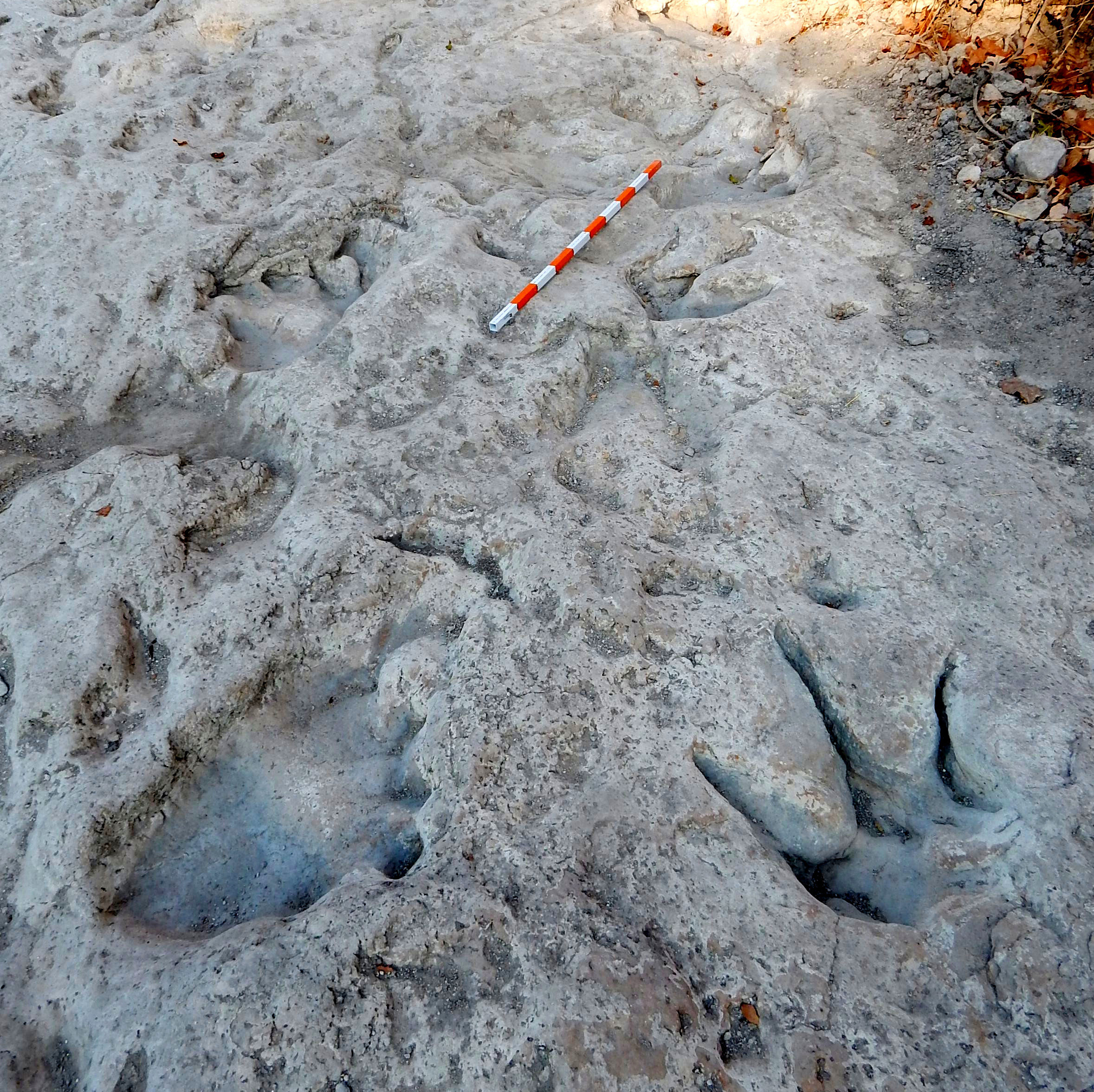
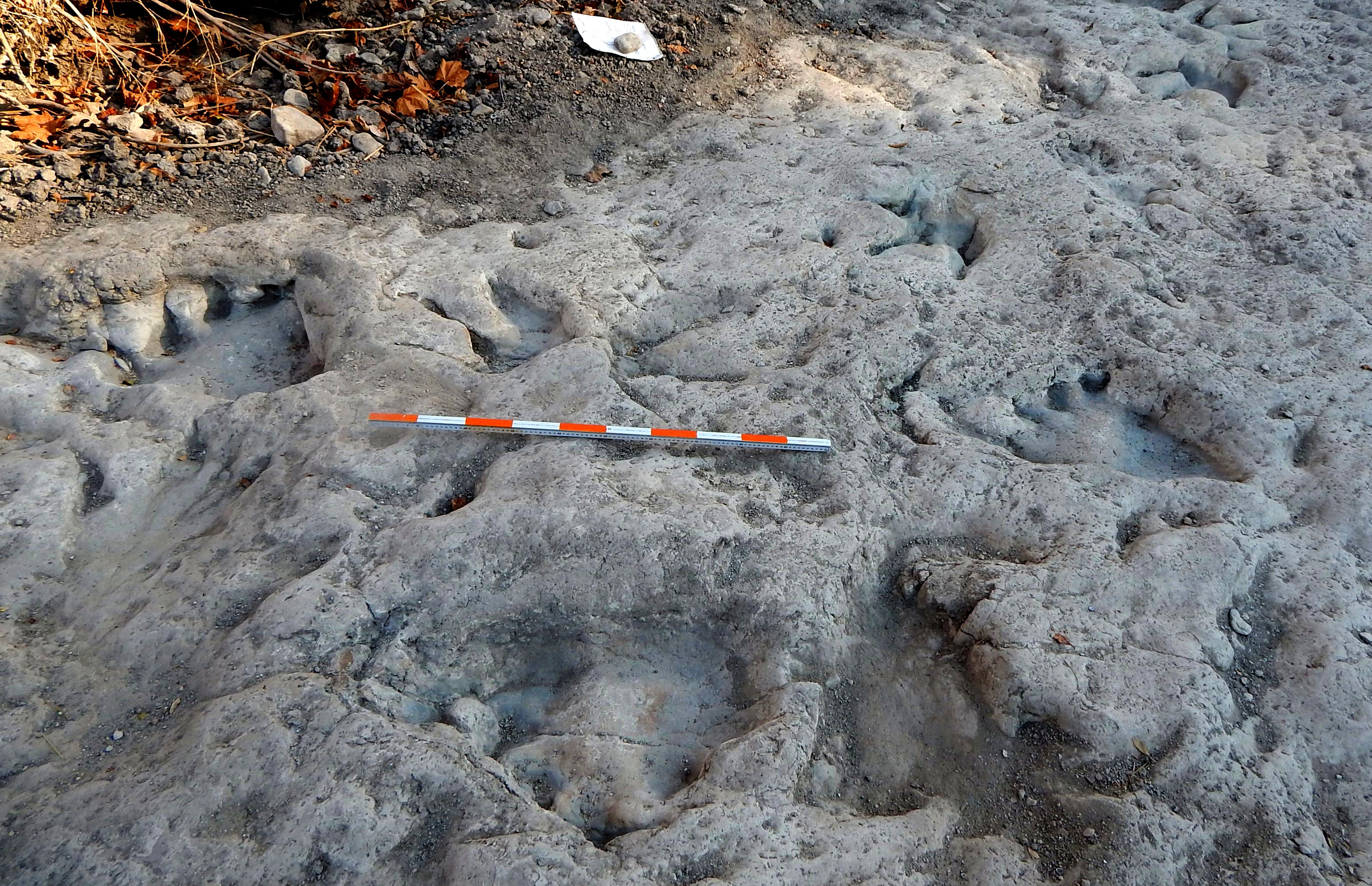
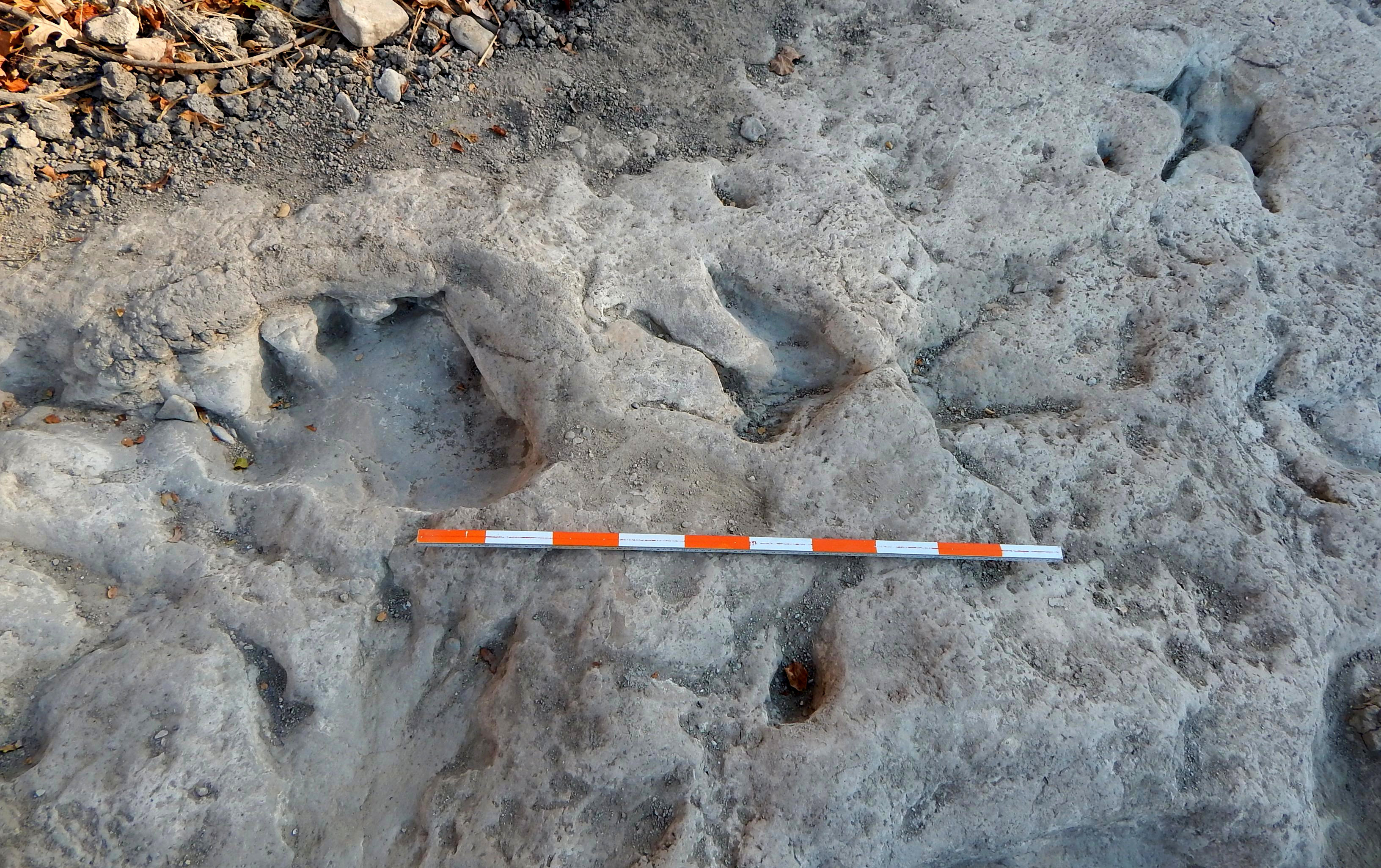
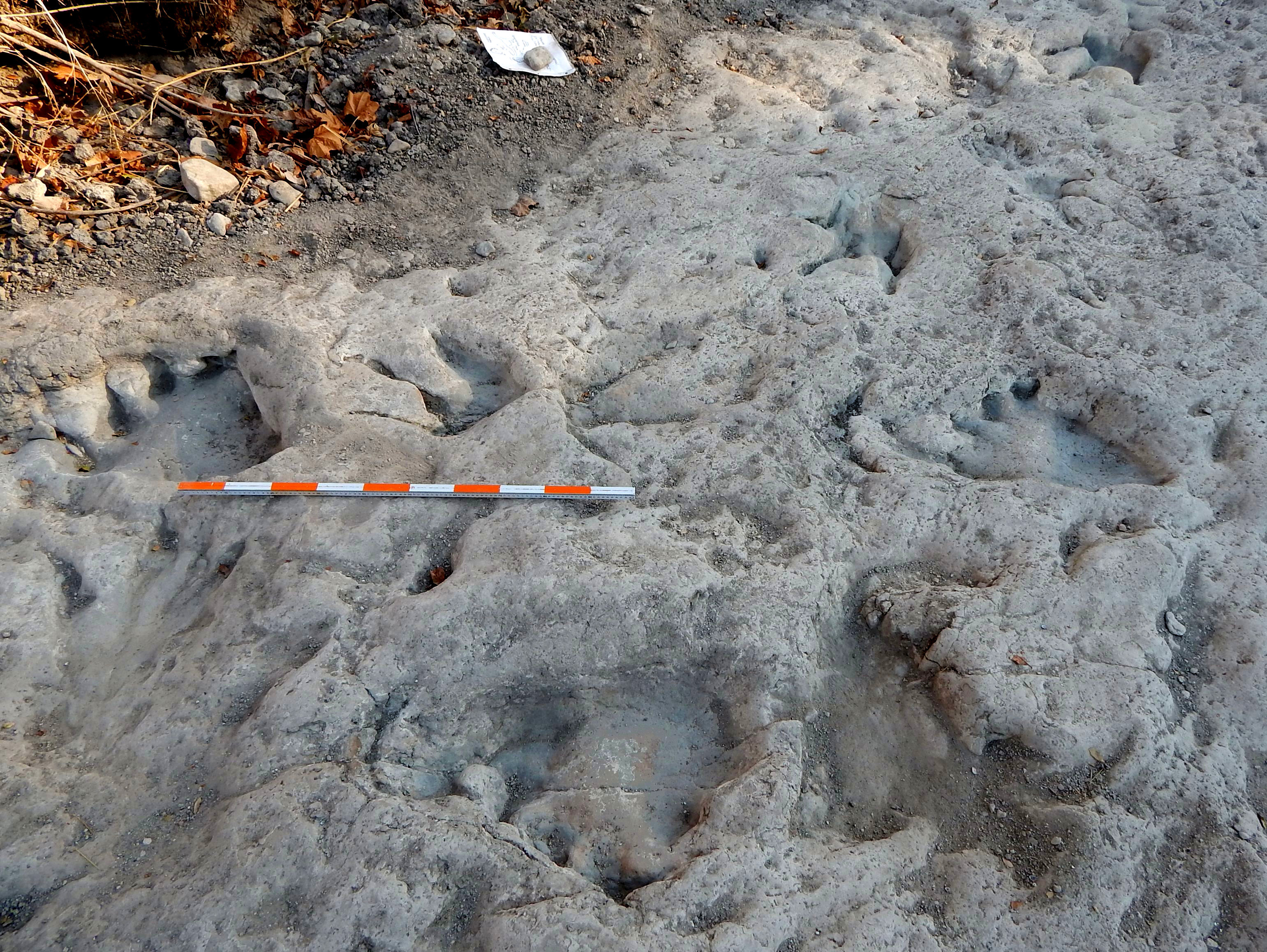
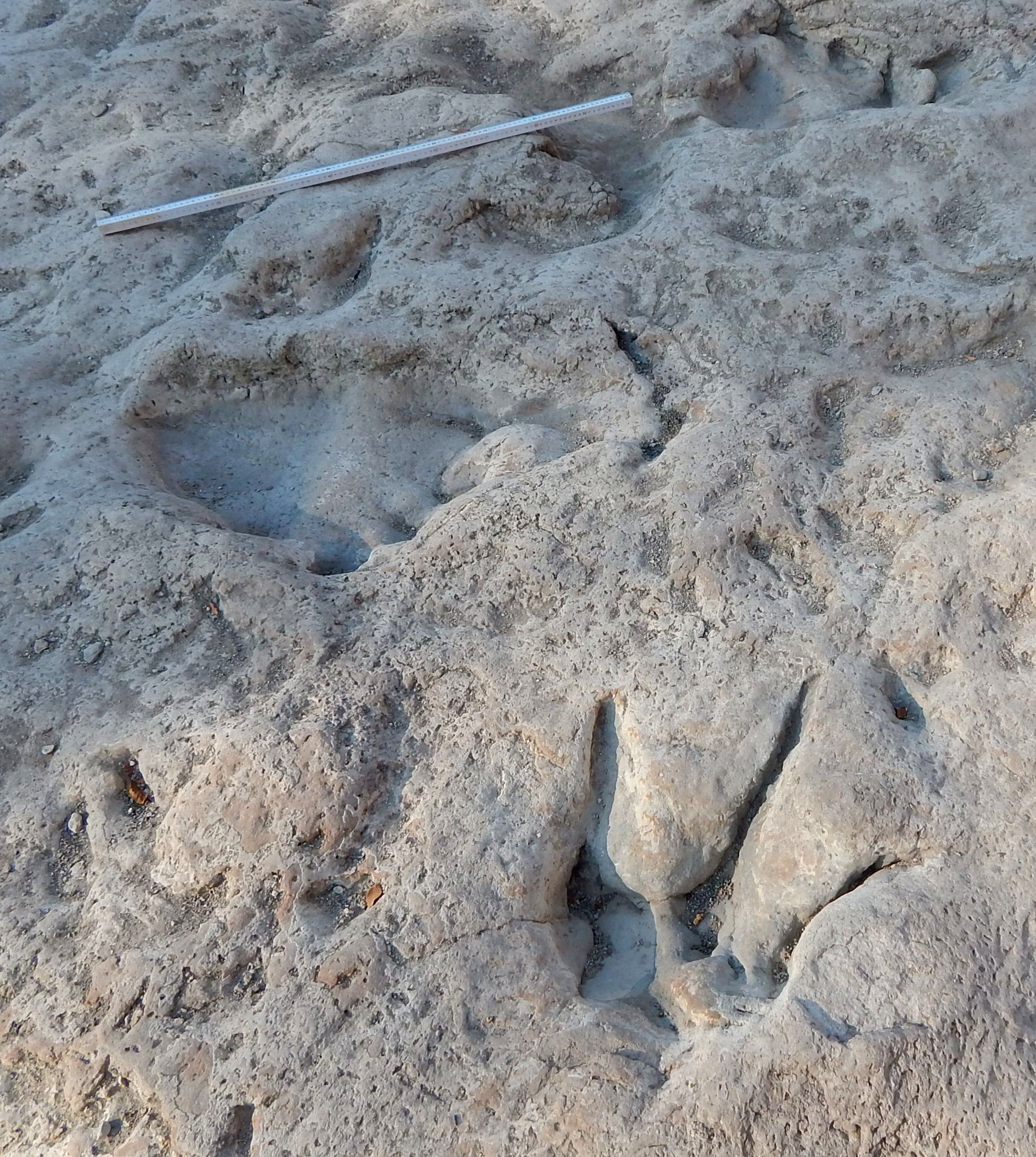
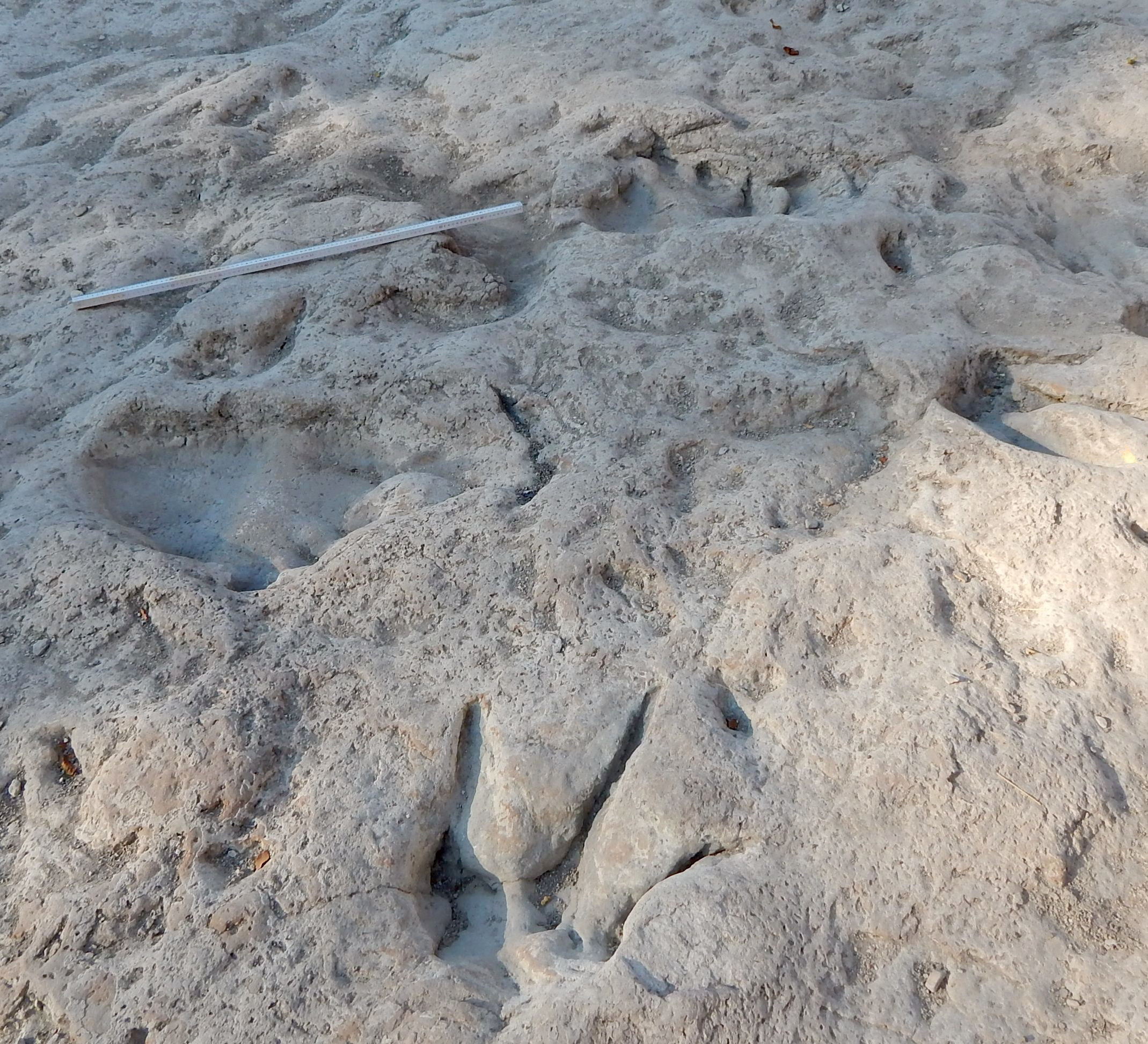
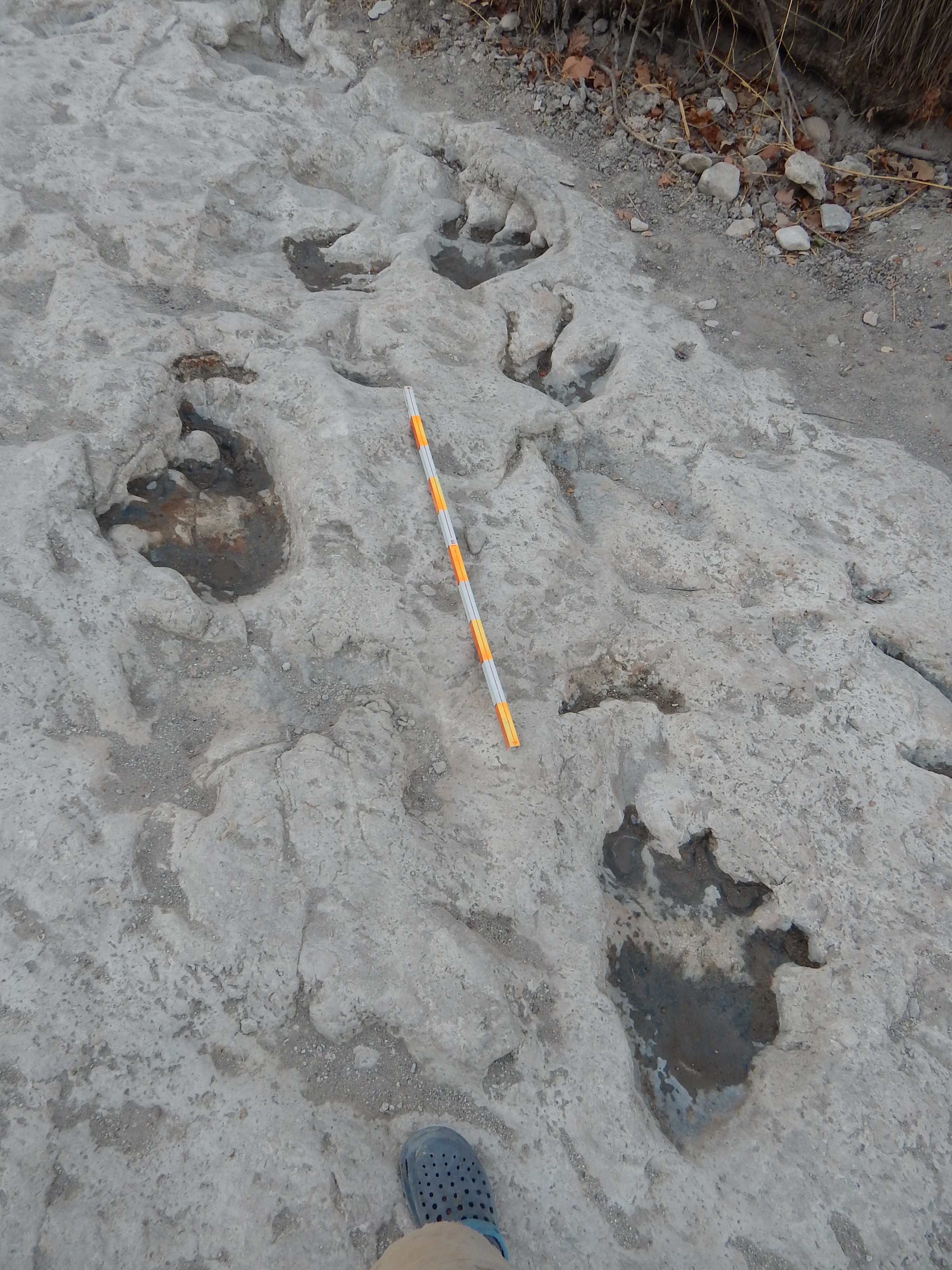
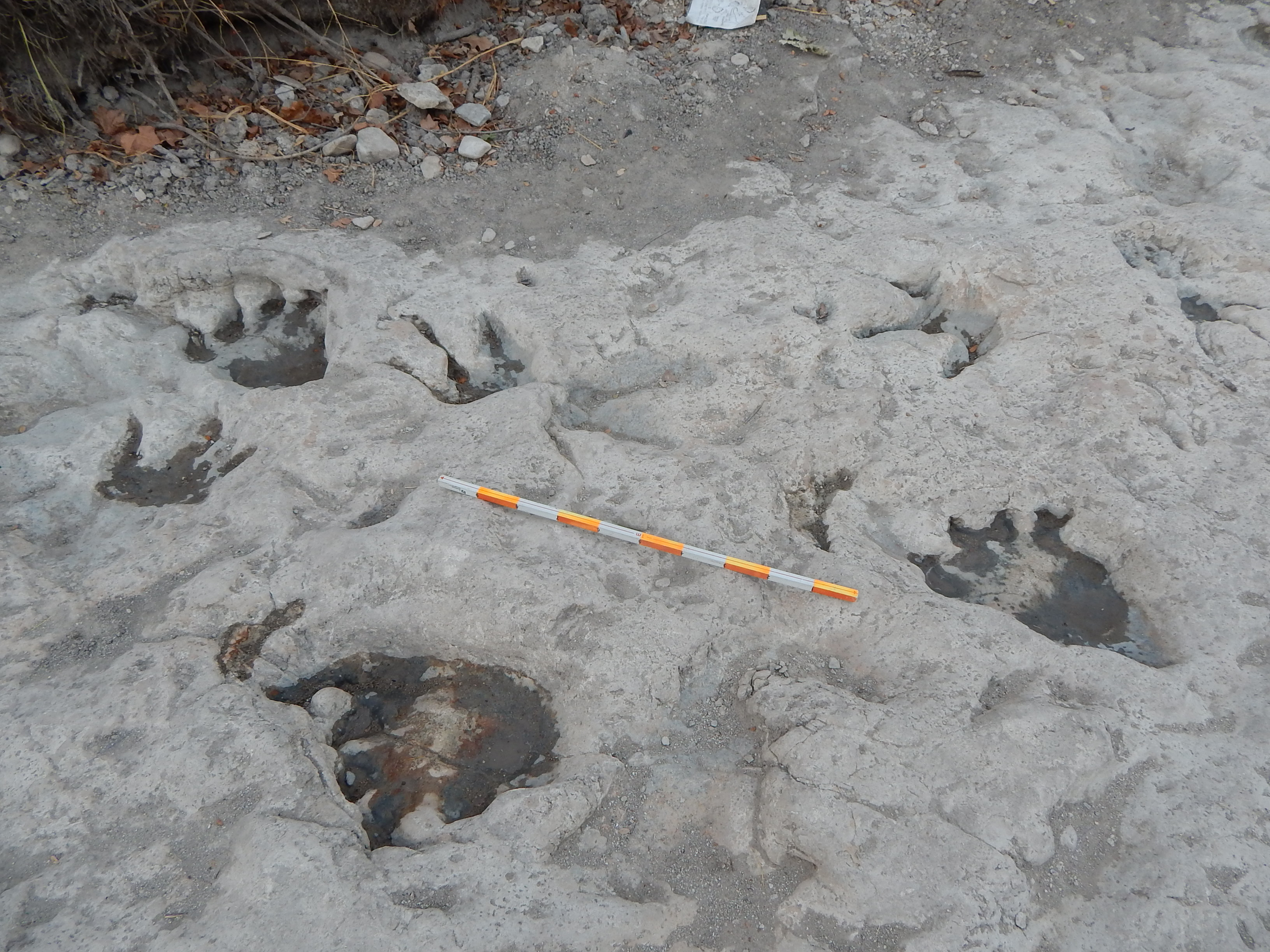
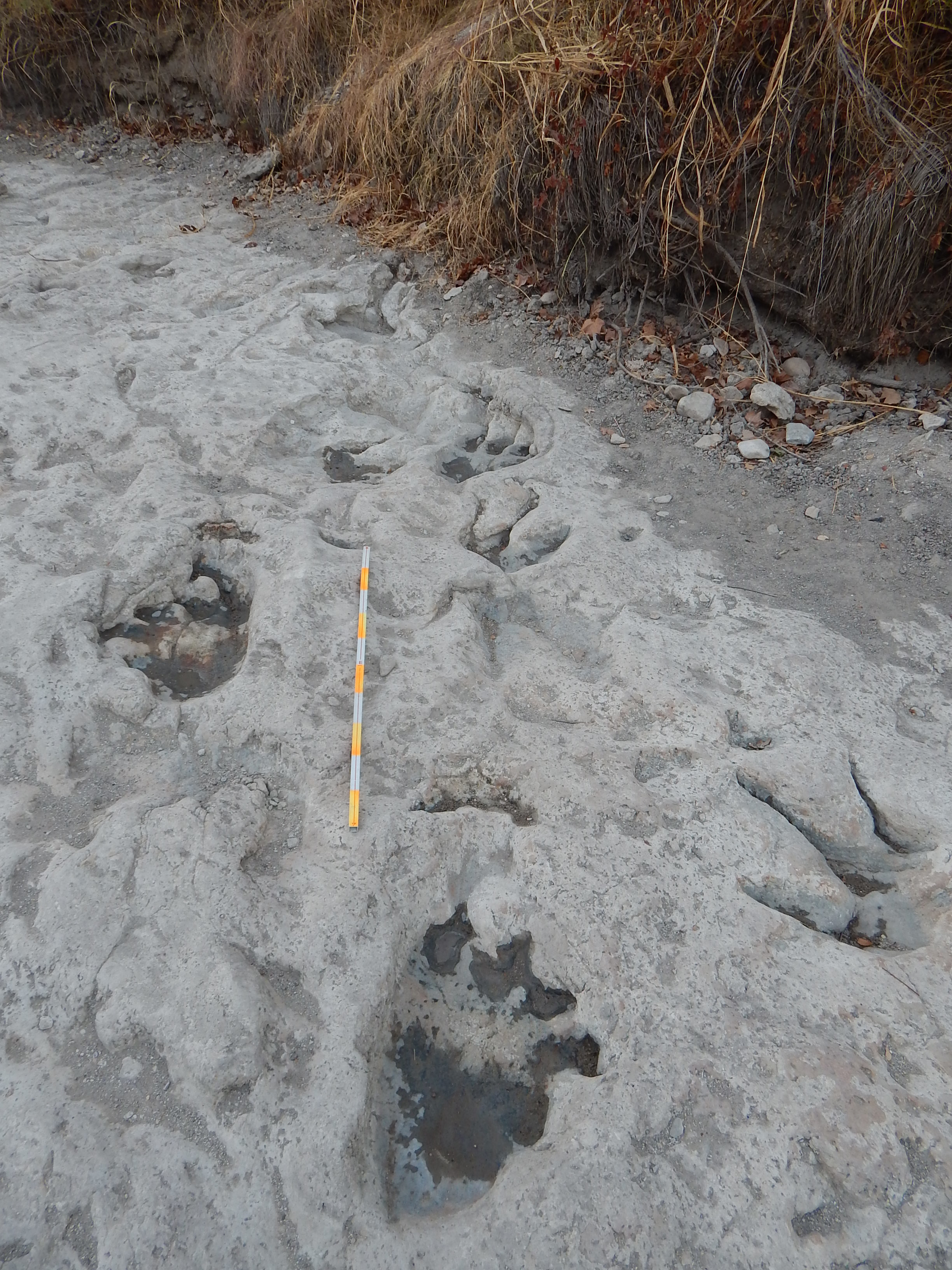
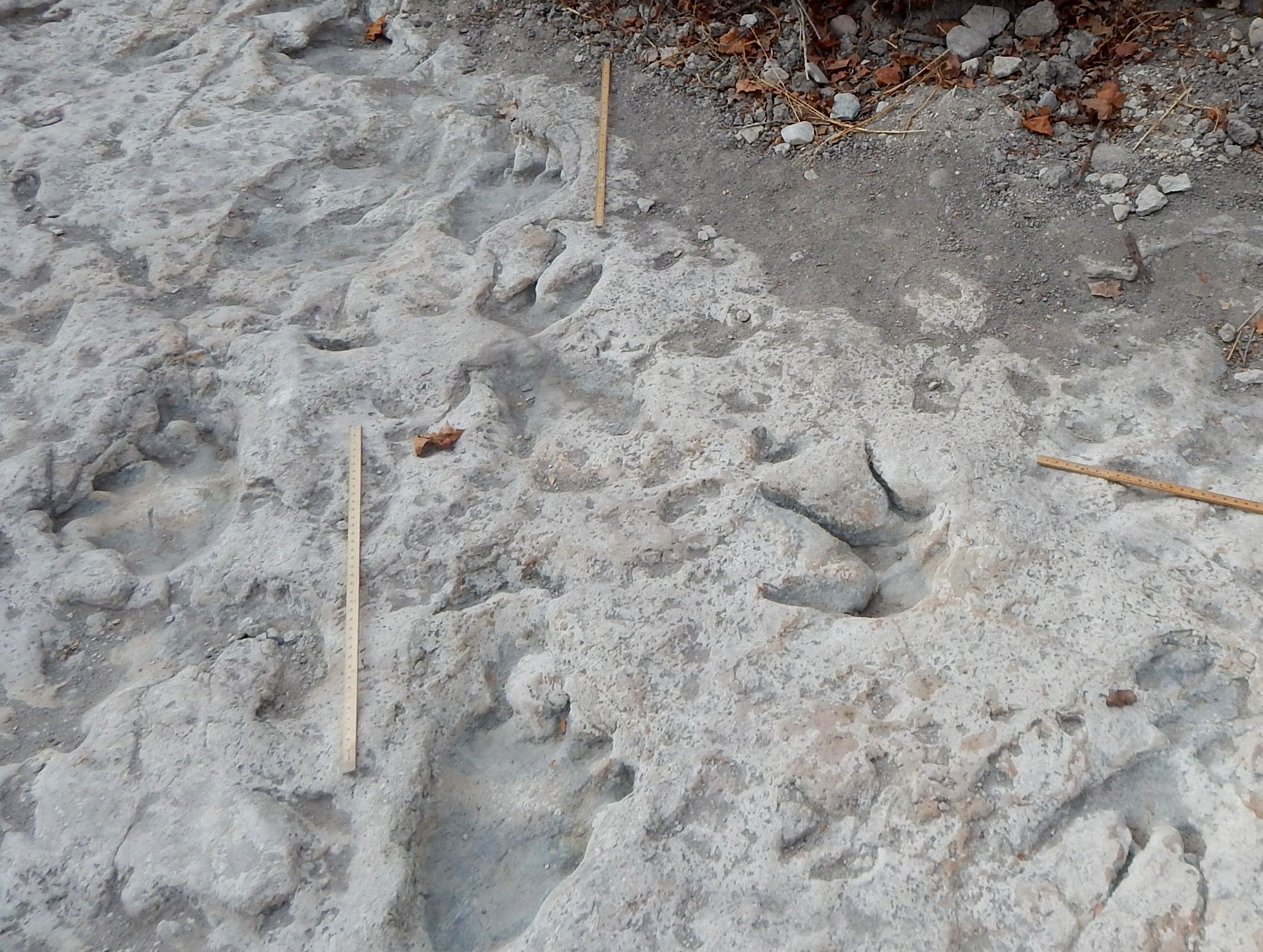
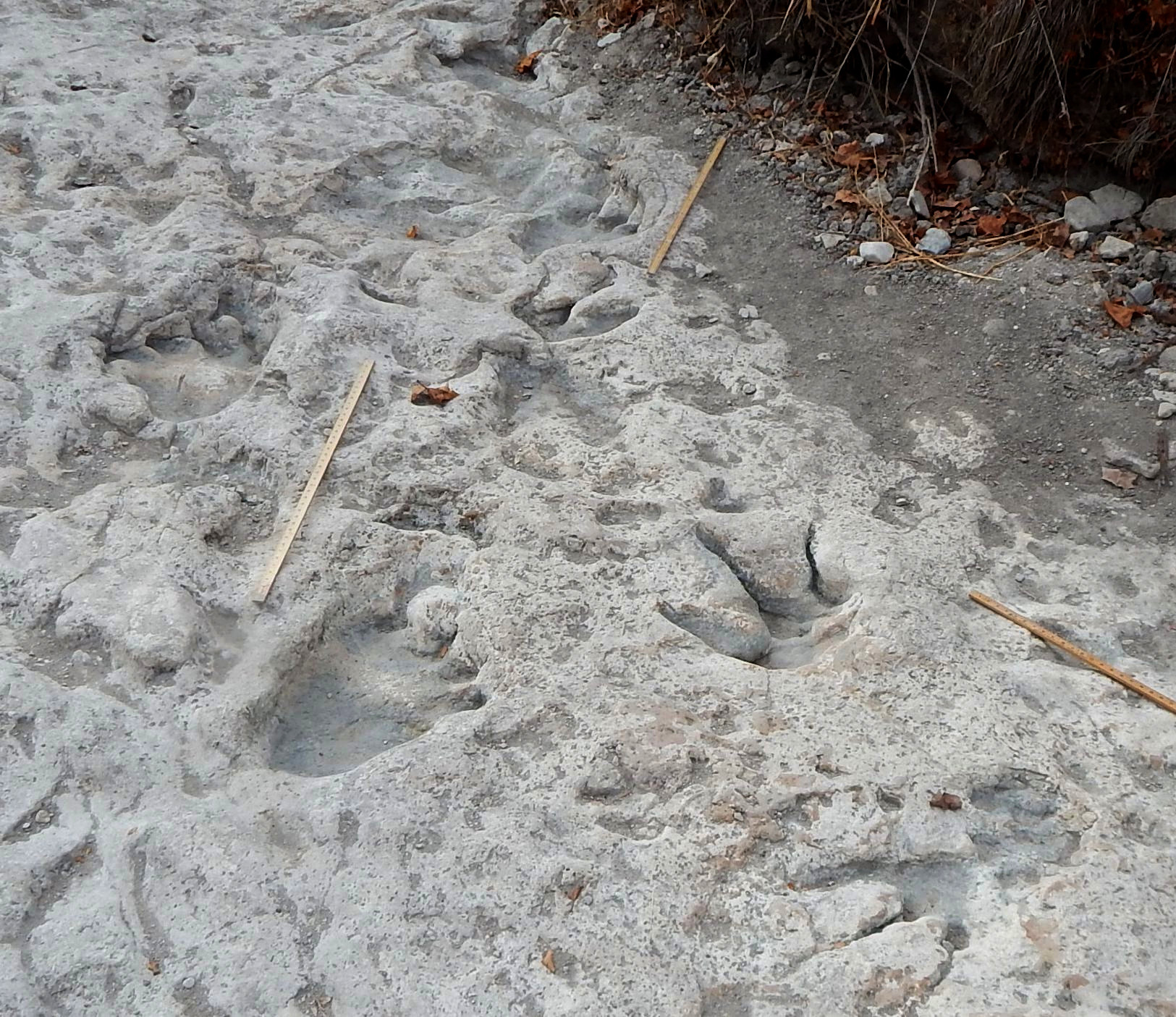
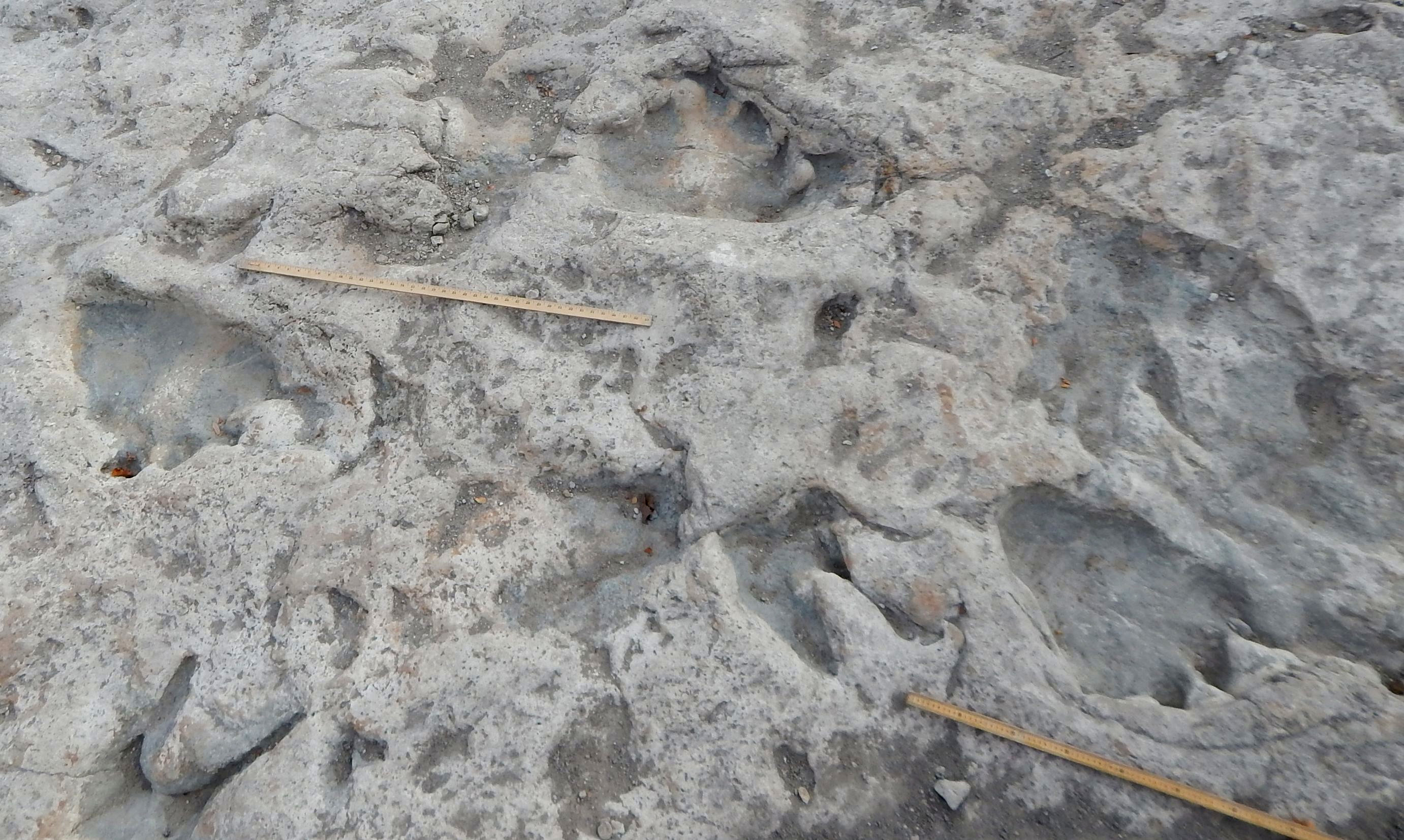
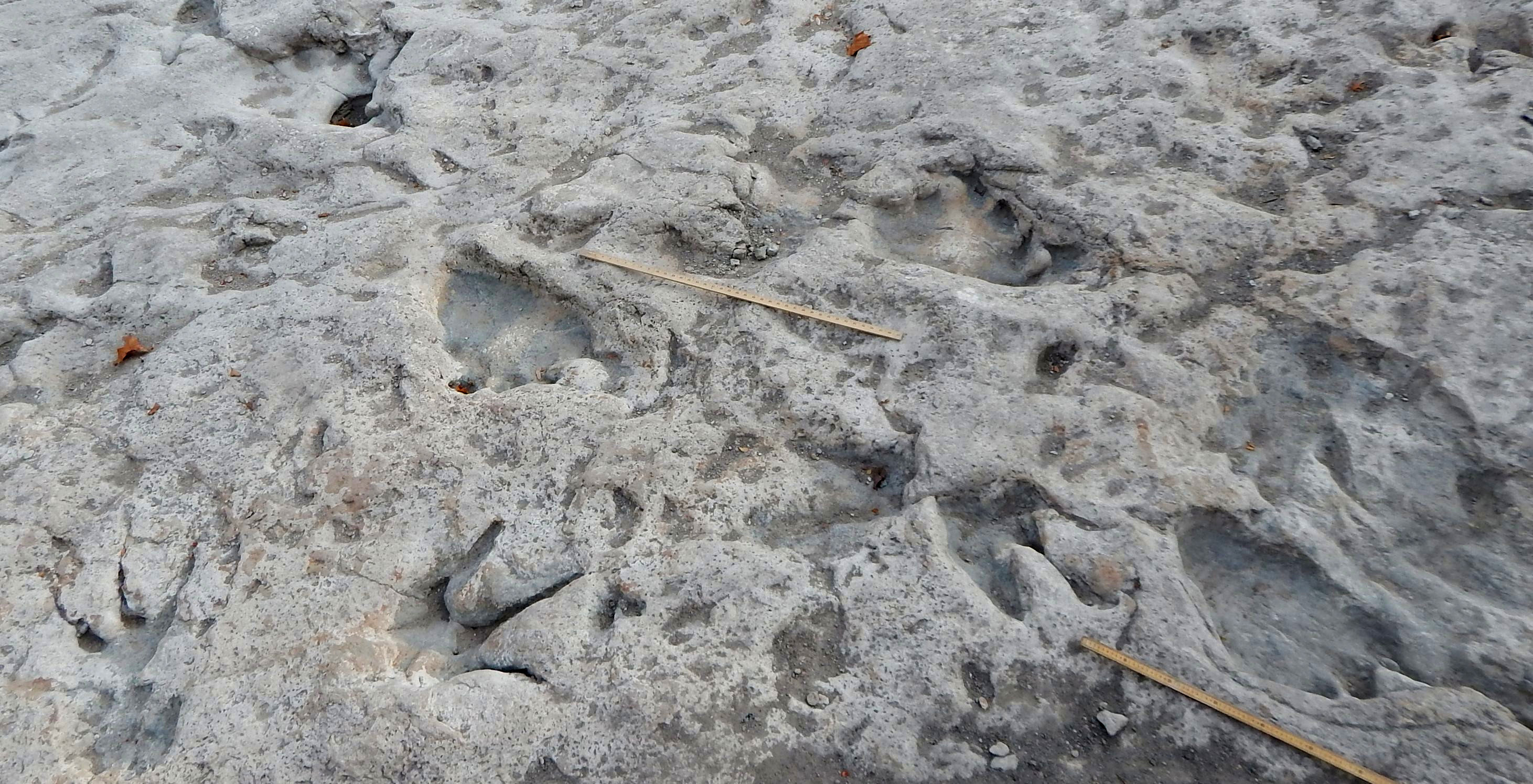
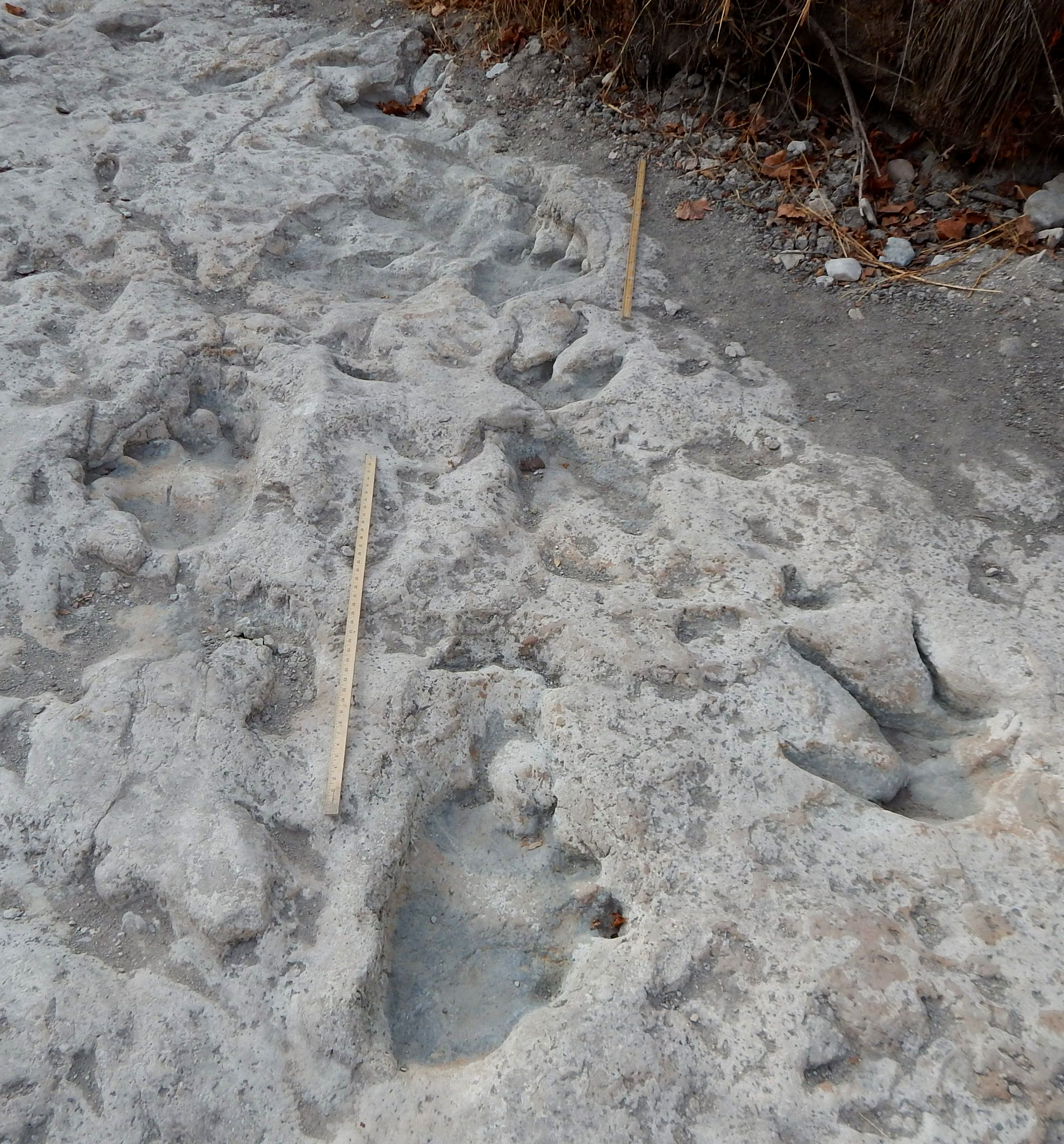
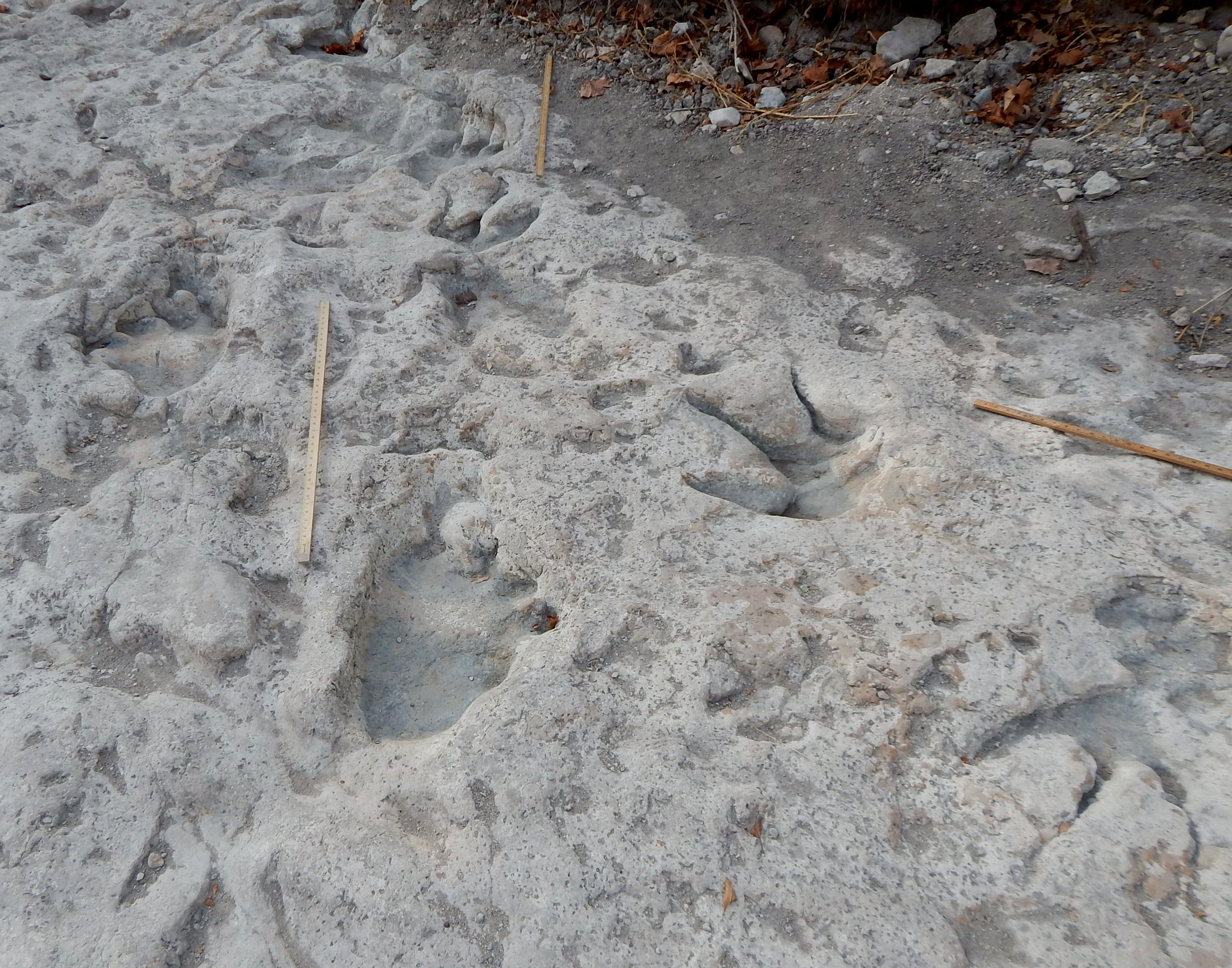
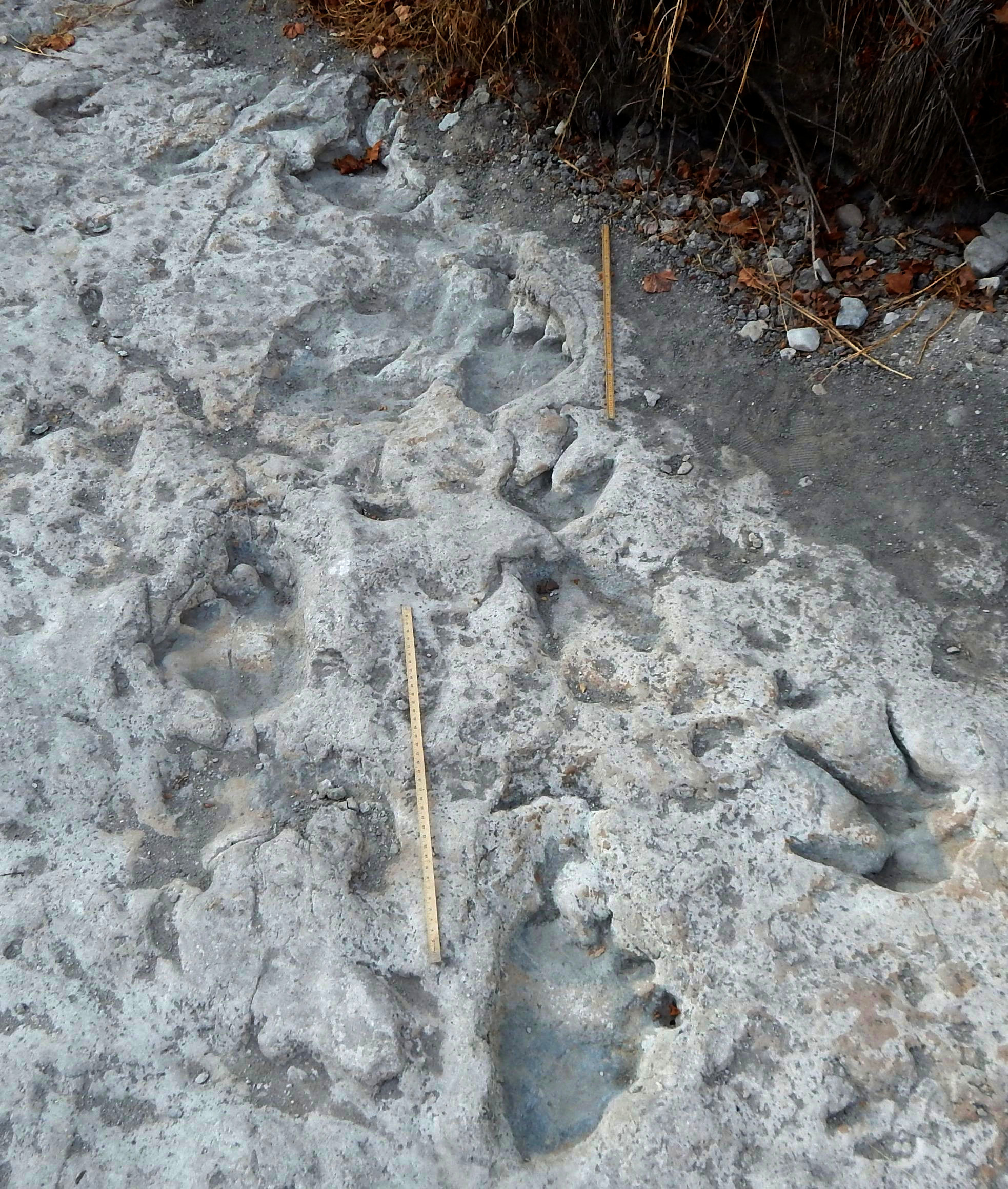
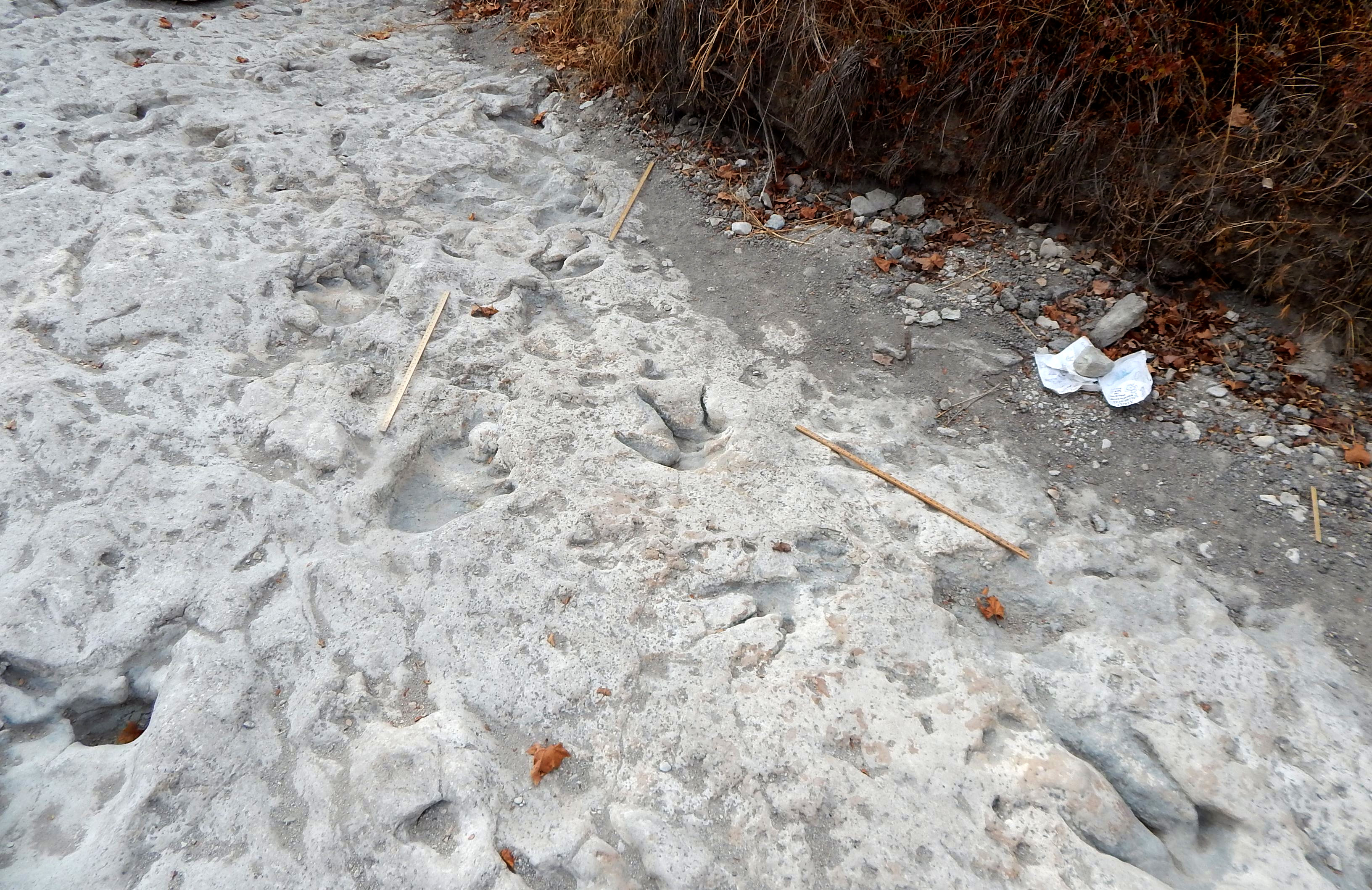
The Ballroom contains two largely parallel trails of juvenile (youngster) sauropod tracks. Almost all of the tracks in both trails show some distortion due to overlapping of the many theropod tracks around them. Most also do not show clear front foot impressions, either because the sauropods stepped on their front prints while walking, or again, due to overlap of one or more theropod tracks. However, in the southern juvenile sauropod trail, three consecutive tracks near the west bank are remarkably complete and well preserved. Each is each about 23 inches long (less than 2/3 the size of the adult sauropod tracks), and all three show all five digits on the rear prints, as well as portions of the smaller and rounder front prints, which appear as crescent shaped impressions. They are not complete because of partial overlap of the rear prints, and in at least one case, overlap of a small, shallow theropod print. Both juvenile trails are heading southwest, in contrast to the adult (mama or papa?) sauropod trail proceeding south east.
Most of these tracks were first well exposed and documented during the large mapping project of 2009 and 2011, although the one closest to the west bank was first recorded in 2023. These juvenile sauropods are likely the same species as the adult, currently identified as Sauroposeidon. In the same area near the west bank are several theropod tracks, including two of the largest on the site, which show a very long step length. Even these indicate an Acrocanthosaurus only about 2/3 grown.
There is a theropod track (probably of Acrocanthosaurus) near one of the three best sauropod tracks, and heading in essentially the same direction, but the tracks before it are not discernible, and it's not clear that the theropod was chasing let alone attacking the theropod, since the steps of the sauropod indicate a normal walking gait, and most theropod tracks go in many different directions on the site (rather than following the sauropods). These observations suggest that at least most of the time, the theropods were probably probably feeding on other things, namely a variety of small vertebrates (fish, amphibians, reptiles) and invertebrates (crustaceans, mollusks, ammonites, urchins, etc) in the mud and shallow water. Indeed, many species of invertebrate fossils and several kinds of plants (plus occasional fish teeth) are found in the marl layers above the track bed, and sometimes embedded in the track bed. The orange and white rods in the photos are meter sticks, divided into decimenters (10 centimeter spans). A meter is about 39 inches long.
For photos of the same trail from previous years (when they were in even more pristine conditions) see:
http://paleo.cc/paluxy/ballroom/Ballroom Menu.htm
All photos and text (C) 2023 Glen J. Kuban